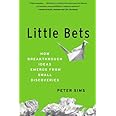
Creativity is often seen as a gift, a spark of inspiration that strikes unexpectedly and leads to groundbreaking ideas. However, in his book “Little Bets: How Breakthrough Ideas Emerge from Small Discoveries,” Peter Sims presents a compelling case for a different approach to creativity: one rooted in experimentation and incremental progress. This article explores the concept of “little bets” and how they can enhance creativity, drawing on real-world examples, case studies, and valuable insights.
Understanding Little Bets

Little bets are small, low-risk experiments that allow individuals and organizations to test ideas, learn from failures, and make incremental improvements. Rather than relying solely on grand visions or big ideas, little bets encourage a process of exploration and iteration. Sims defines little bets as:
- Low-cost: They require minimal investment, allowing for trial and error without significant financial risk.
- Quick to execute: Little bets can be implemented rapidly, enabling faster learning cycles.
- Focused on learning: Each bet serves as a valuable learning opportunity, regardless of the outcome.
The Science Behind Experimentation and Creativity

Research in psychology and behavioral science supports the idea that experimentation fosters creativity. A study published in the journal “Psychological Science” found that engaging in playful, exploratory activities enhances creative thinking. The study’s authors, including Dr. Jennifer Wiley, concluded that “playful exploration helps individuals generate more ideas and solutions.” This aligns with Sims’ assertion that little bets encourage an experimental mindset.
Case Studies: Little Bets in Action
1. The Story of Pixar
Pixar Animation Studios is a prime example of a company that has effectively utilized little bets to foster creativity and innovation. The studio is known for its collaborative culture and willingness to experiment. One notable instance is the development of the film “Toy Story.” Rather than committing to a fully realized script from the outset, the team started with various prototypes and short test animations.
- Rapid Prototyping: Pixar’s team created multiple short films to explore different characters and storylines, allowing them to gauge audience reactions.
- Feedback Loops: Regular screenings of rough cuts provided valuable feedback that informed the final product, leading to a film that resonated with audiences.
This iterative process not only resulted in a successful film but also established a framework for future projects, demonstrating the power of little bets in the creative process.
2. The Evolution of Airbnb
Airbnb’s rise to prominence is another example of how little bets can lead to significant breakthroughs. In its early days, the founders experimented with various business models and marketing strategies to determine what resonated with users. One of their key little bets involved:
- Testing Different Markets: Airbnb launched in multiple cities simultaneously to understand regional preferences and adapt their platform accordingly.
- Iterative User Feedback: They actively sought feedback from early users, leading to changes in the user experience that improved customer satisfaction.
Through these small experiments, Airbnb was able to refine its business model and scale rapidly, eventually transforming the hospitality industry.
The Benefits of Embracing Little Bets

Incorporating little bets into the creative process offers numerous advantages:
- Risk Mitigation: Little bets reduce the stakes associated with failure, encouraging teams to take risks without the fear of catastrophic losses.
- Faster Learning: Rapid experimentation leads to quicker feedback cycles, allowing for timely adjustments and improvements.
- Enhanced Collaboration: Little bets often involve cross-disciplinary teams, fostering collaboration and diverse perspectives that can spark innovation.
- Increased Resilience: The iterative nature of little bets builds a culture of resilience, where failures are viewed as learning opportunities rather than setbacks.
Implementing Little Bets in Your Creative Process

To harness the power of little bets in your own creative endeavors, consider the following strategies:
- Start Small: Identify low-cost, low-risk experiments related to your ideas and begin testing them.
- Establish Feedback Mechanisms: Create channels for receiving feedback from peers, mentors, or potential customers to inform your next steps.
- Document Your Journey: Keep track of your experiments, including what worked and what didn’t, to build a repository of insights for future reference.
- Encourage a Culture of Experimentation: Foster an environment where team members feel safe to take risks and share their learnings, regardless of the outcome.
The Transformative Power of Little Bets

In a world that often glorifies big ideas and grand visions, Peter Sims’ concept of little bets offers a refreshing perspective on creativity and innovation. By embracing an experimental mindset and focusing on small, actionable steps, individuals and organizations can unlock new levels of creativity and resilience. The case studies of Pixar and Airbnb illustrate the effectiveness of this approach, showcasing how little bets can lead to significant breakthroughs.
As you navigate your own creative journey, remember that every great idea often begins with a series of small experiments. By adopting the principles of little bets, you can cultivate a culture of creativity that thrives on exploration, learning, and growth. Ultimately, it’s through these incremental discoveries that the most transformative ideas emerge.
