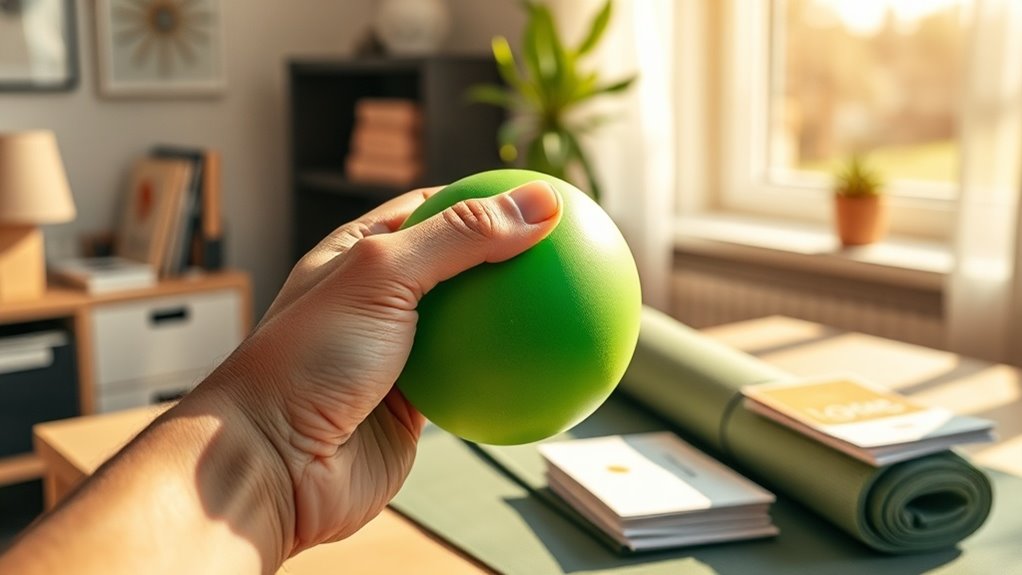

Begin with simple finger extensions using light bands, gradually increasing resistance as you progress. This not only improves flexibility but also strengthens the surrounding muscles.
Consistency is key, so aim for regular sessions to notice lasting benefits in your hand function.
Natural Remedies to Relieve Discomfort
While seeking relief from the discomfort of trigger finger, exploring natural remedies can be an effective first step.
You might find warmth from a gentle heat pack soothing, or consider topical treatments like arnica gel to reduce inflammation.
Additionally, incorporating turmeric into your diet could help due to its anti-inflammatory properties.
Staying mindful of your hand movements can also support recovery and comfort. Engaging in gentle exercises may further enhance flexibility and blood circulation to promote healing.
Ergonomic Adjustments for Everyday Activities
How can you make your daily activities more comfortable if you’re dealing with trigger finger? Ergonomic adjustments can help reduce strain. Consider the following table for practical changes:
| Activity | Ergonomic Adjustment |
|---|---|
| Typing | Use an ergonomic keyboard and wrist rest |
| Cooking | Choose lightweight utensils |
| Texting | Utilize voice-to-text features |
| Cleaning | Use long-handled tools |
| Driving | Adjust seat position for comfort |
When to Seek Professional Help
When should you consider seeking professional help for trigger finger? If your symptoms persist despite home remedies, or if your fingers lock frequently, it’s time to consult a healthcare provider.
Additionally, if you experience significant pain, swelling, or reduced mobility, professional assessment is essential. Early intervention can prevent complications and improve your flexibility, allowing you to regain normal function in your hand.