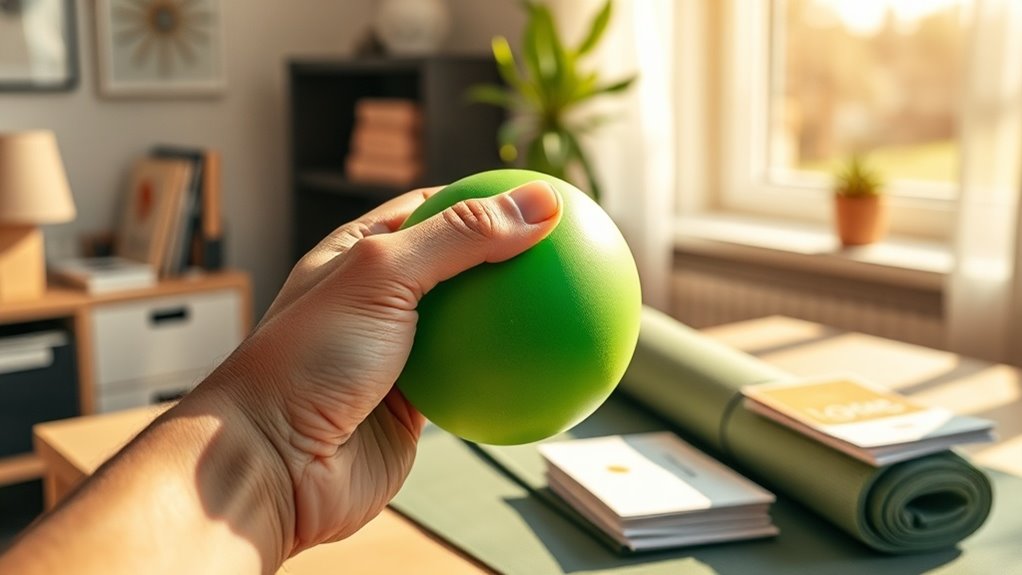

Focus on gently kneading the muscles at the base of your fingers and palms. Use circular motions with your thumb to increase circulation, and apply light pressure along the tendons.
Regular massages can alleviate tension, promoting flexibility and reducing discomfort, making it easier for you to move your fingers.
Warm-Up Routine Tips
Although you may be eager to alleviate trigger finger symptoms, establishing a consistent warm-up routine can play a crucial role in your recovery.
Start by gently stretching your fingers and hands before any activity. Try opening and closing your fists slowly, and incorporate finger joint movements.
These techniques help increase flexibility, reduce stiffness, and enhance blood flow—supporting your overall healing process effectively.
Essential Finger Strengthening Routines
To effectively combat trigger finger, incorporating essential finger strengthening routines into your daily routine can make a significant difference.
Daily stretching exercises and resistance band workouts are particularly beneficial for improving flexibility and strength in your fingers.
Daily Stretching Exercises
Daily stretching exercises can significantly boost your finger strength and mobility, helping to alleviate the discomfort associated with trigger finger.
Incorporating gentle stretches like finger flexion and extension can enhance flexibility. Try holding each stretch for 15-30 seconds, repeating them several times a day.
Consistency is key; over time, you’ll likely notice improved range of motion and reduced symptoms.
Resistance Band Workouts
Incorporating resistance band workouts into your routine can significantly enhance finger strength and stability, especially for those dealing with trigger finger.