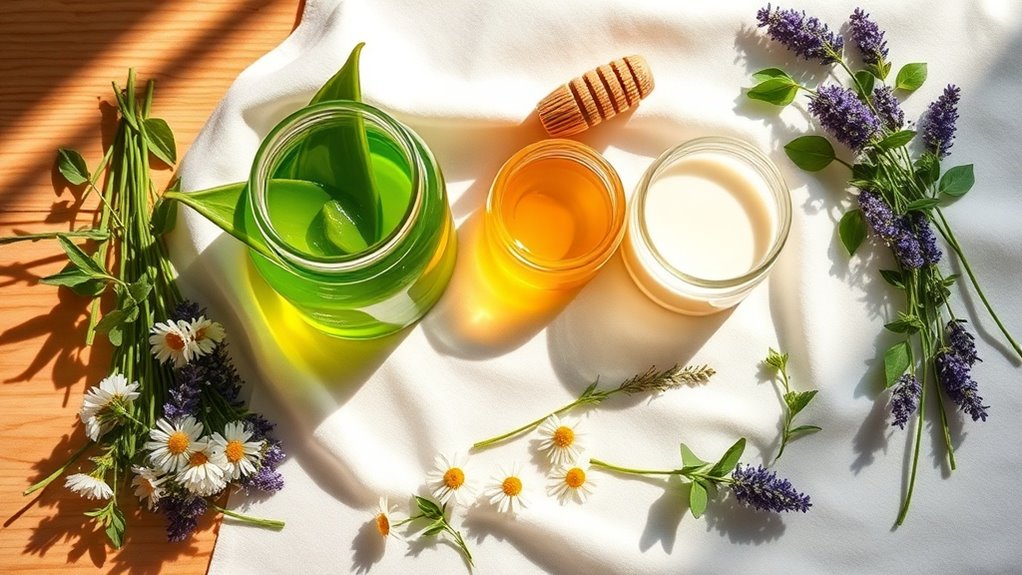
- Mixing turmeric with honey to create an effective face mask.
- Adding turmeric to your diet for systemic benefits.
- Using turmeric essential oil diluted in a carrier oil for targeted application.
Integrating these methods can promote healthier skin. Additionally, prolonged inflammation may lead to increased frustration with skin health, making turmeric’s properties even more valuable.
The Role of Cold Compresses
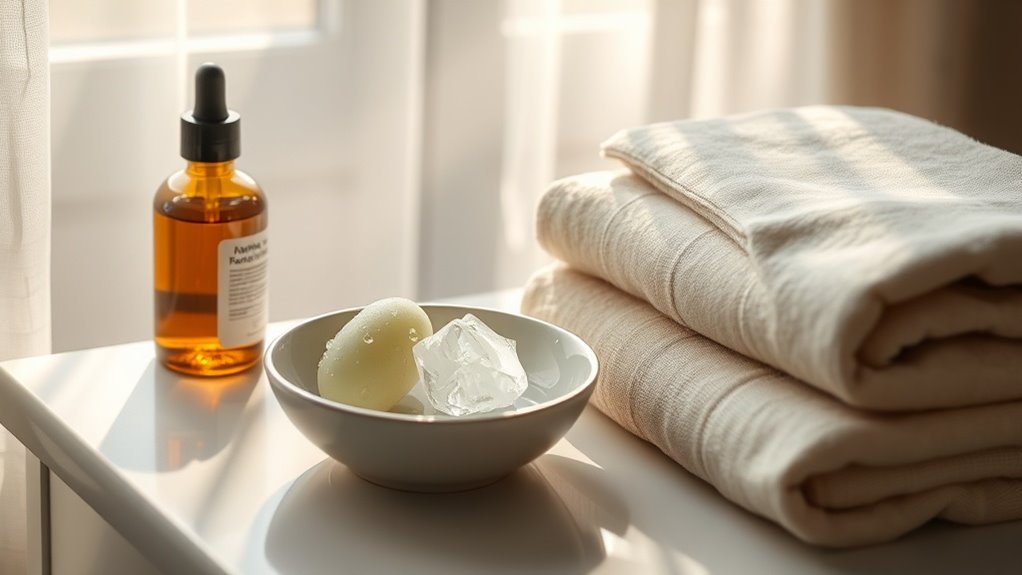
Applying a cold compress can be an effective strategy for reducing facial inflammation quickly. The cold temperature constricts blood vessels, limiting swelling and numbing the area, which can alleviate discomfort. For optimal results, wrap ice or a cold pack in a clean cloth and apply it for 10-15 minutes. Repeat this process several times a day for noticeable improvement in inflammation. Additionally, incorporating soothing ingredients like aloe vera can enhance the calming effects of the compress.
Essential Oils for Facial Inflammation
Here are three recommended options:
- Lavender Oil: Known for its calming properties, it reduces redness and promotes healing.
- Tea Tree Oil: Its antibacterial effects help combat acne-related inflammation.
-
Chamomile Oil: This oil soothes irritation, providing a gentle anti-inflammatory effect.
Incorporate these oils into your skincare routine carefully. Additionally, natural remedies can be effective in managing low blood pressure symptoms, which may also influence skin health.
Keeping Your Skin Hydrated and Nourished
To effectively manage facial inflammation, keeping your skin hydrated and nourished is essential for maintaining its health and resilience. Use products that contain hyaluronic acid and lipids. Incorporating foods rich in omega-3 fatty acids also helps. Here’s a quick guide to assist you:
| Hydrating Ingredients | Nourishing Ingredients |
|---|---|
| Hyaluronic Acid | Omega-3 Fatty Acids |
| Aloe Vera | Avocado |
| Glycerin | Olive Oil |
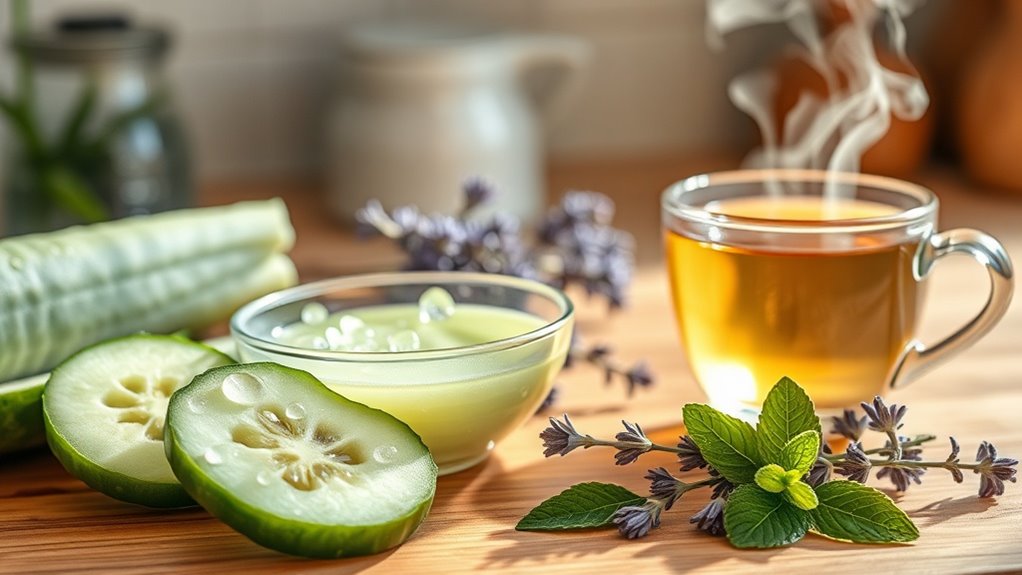
| Cucumber | Shea Butter |